Garage and seasonal storage organization
How to organize a garage and rotate seasonal storage: zones, shelving, bins and labels, a simple swap calendar and an inventory that stays current.
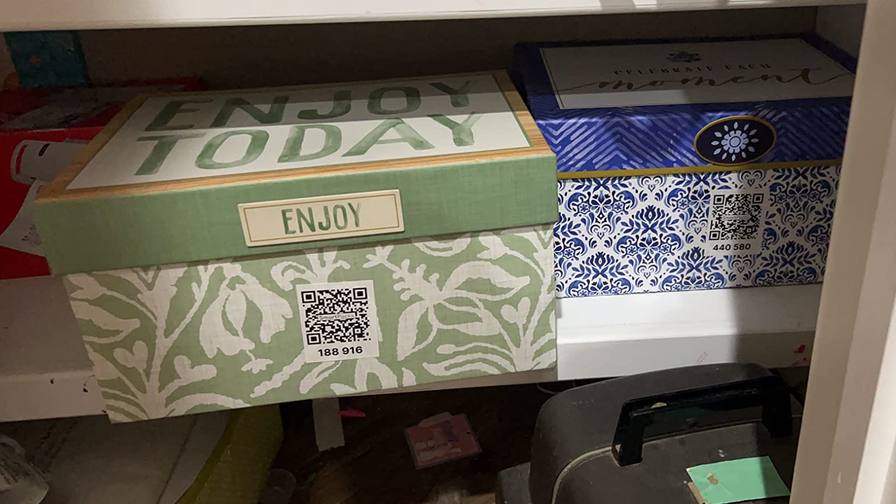
The garage is where things go when there’s nowhere else to put them. Holiday decorations, camping gear, the kids’ bikes, paint from three rooms ago, and bins of clothes that are either too small or not quite big enough yet. Without a system, every season starts the same way: everything comes off the shelves before the one bin you wanted turns up at the back.
A garage that works isn’t about buying the perfect shelving. It’s about zones, consistent containers, a label on every bin, and a list of what’s inside that you can search. Here’s how to set that up, and how to keep it working through the seasonal swaps.
Start with a clear-out
Organizing clutter just gives you neatly stacked clutter. Before you buy a single bin, empty the garage, or one wall of it if the whole thing is too much for a weekend.
Sort everything into five groups:
- Keep in the garage: tools, outdoor gear, seasonal things, car supplies.
- Belongs in the house: the things that drifted out and never went back.
- Donate or sell: things in good condition you haven’t used in a year or two.
- Recycle or throw away: broken items, dried-up paint, empty boxes.
- Not sure: give these a single bin and a date. If you haven’t opened it by then, it goes.
Plan zones
Group what’s left into zones, and give each zone a place in the garage.
- Daily use, near the door: shoes, bags, the recycling, things you grab on the way out.
- Car: cleaning supplies, spare fluids, the tire pump.
- Tools and workbench: hand tools, power tools, hardware.
- Garden and outdoor: gardening tools, hoses, outdoor toys.
- Sports and play: bikes, balls, helmets, camping gear.
- Seasonal and holiday: decorations, seasonal clothes, patio cushions.
- Long-term storage: keepsakes, archive boxes, things being kept for later.
Put what you use every week at eye level and near the door. Seasonal things can go higher up or further back, since you only reach for them a few times a year.
Go vertical
Floor space in a garage belongs to the car, the bikes and the walkway. Everything else should go up.
- Sturdy shelving along the walls holds bins and boxes. Measure your bins before you buy shelves so the shelf depth and spacing fit them.
- Wall hooks and rails take bikes, ladders, long-handled tools and hoses.
- Overhead racks suit light, rarely used things, which makes them a natural home for holiday bins.
- Heavy things low, light things high. That applies to every shelf, not only the tall ones.
Choose containers that stack
Mixed boxes of every size make for wobbly stacks and wasted shelf space. Pick one or two bin sizes and use them everywhere.
- Plastic totes with lids suit a garage best: they keep out dust, and they cope better with a damp floor than cardboard does.
- Cardboard boxes are fine on shelves in a dry garage and for things you rarely touch.
- Clear or opaque? Clear bins let you see the contents, but only if the right side is facing you and nothing is stacked in front. With a label and a list of what’s inside, an opaque bin is just as easy to find, and it looks calmer on the shelf.
Label every bin
A label you can read from where you stand is the difference between a system and a pile.
- Put the label on the short end that faces out when the bin is on the shelf.
- Scan it and record the contents before the lid goes on: one photo of the open bin, plus separate items for anything you’ll look for on its own.
- Use the words you’d search for, including family nicknames. “Grandma’s quilt” is easier to find than “blanket”.
- Color-code by season or by person. For example green for spring and summer, red for fall and winter, blue for sports gear and purple for holidays.
If you want the colors built in, SmartPacks makes a pack of 64 colored QR labels in red, green, blue and purple. The app shows each box’s color in your list and can sort by it. To run the whole garage from your phone, see the home inventory app page, and how to use QR code labels for the first scan.
Make seasonal swaps a routine
A common rhythm is two big swaps a year, in spring and in fall, plus the holidays coming out and going back. Treat each swap as a short routine rather than an expedition.
- Look it up first. Search your inventory for what’s coming out (“winter coats”, “snow boots”, “string lights”) and note the bins and their locations.
- Pull only those bins. With labels facing out, you shouldn’t need to move anything else.
- Clean, dry and repair before storing. Whatever goes back in a bin should be ready to use next season.
- Update the inventory as you go. Delete what you got rid of, add what you bought, and change a bin’s location if it moved.
- Put next season’s bins somewhere easy. The bins you’ll need in six months can go higher or further back.
With SmartPacks Pro, you can set a reminder on a box, such as the winter clothes bin, so the app reminds you when it’s time for the swap.
Holiday decorations
Decorations are the classic garage puzzle: many bins, used for a few weeks a year, and all of them needed at once.
- One holiday per bin, or per group of bins, with the holiday as a keyword.
- Fragile ornaments in divided boxes or their original packaging, recorded as their own items.
- Lights wound around a piece of cardboard so they come out untangled, with a keyword for indoor or outdoor.
- A “first out” bin with the things you put up first: the wreath, the outdoor lights, the hooks and clips.
Next year, search “Halloween” or “lights” and see every bin you need, with its location.
Sports and outdoor gear
- Group by person or by sport, whichever matches how your family grabs things.
- Record sizes in keywords for kids’ gear and clothes, such as “ski boots, kids, size 2”, so hand-me-downs are easy to find when the next child grows into them.
- Keep camping gear together in a few bins: one for shelter and sleeping, one for cooking, one for small things like lanterns and headlamps.
Keep it going
The system only lasts if keeping it up is easier than letting it slide.
- Nothing goes on a shelf without a label. A new bin gets labeled and scanned the day it arrives.
- Update the inventory when something leaves a bin for good. It takes seconds while you’re standing there.
- Do a short reset once a month. Put stray things back in their zones and empty the “not sure” bin when its date comes.
A simple seasonal calendar
Adjust it to your climate and your household.
| Season | Comes out | Goes away |
|---|---|---|
| Spring | Garden tools, bikes, patio cushions | Snow shovels, winter coats, ski gear |
| Summer | Camping gear, beach and pool things | Spring cleaning supplies, rain gear |
| Fall | Rakes, warm coats, Halloween decorations | Patio cushions, beach things, summer clothes |
| Winter | Holiday decorations, snow gear | Fall decorations, garden tools |
With zones, matching bins, a label on every one and an inventory you can search, the garage stops being where things disappear. It becomes the place you can find them.